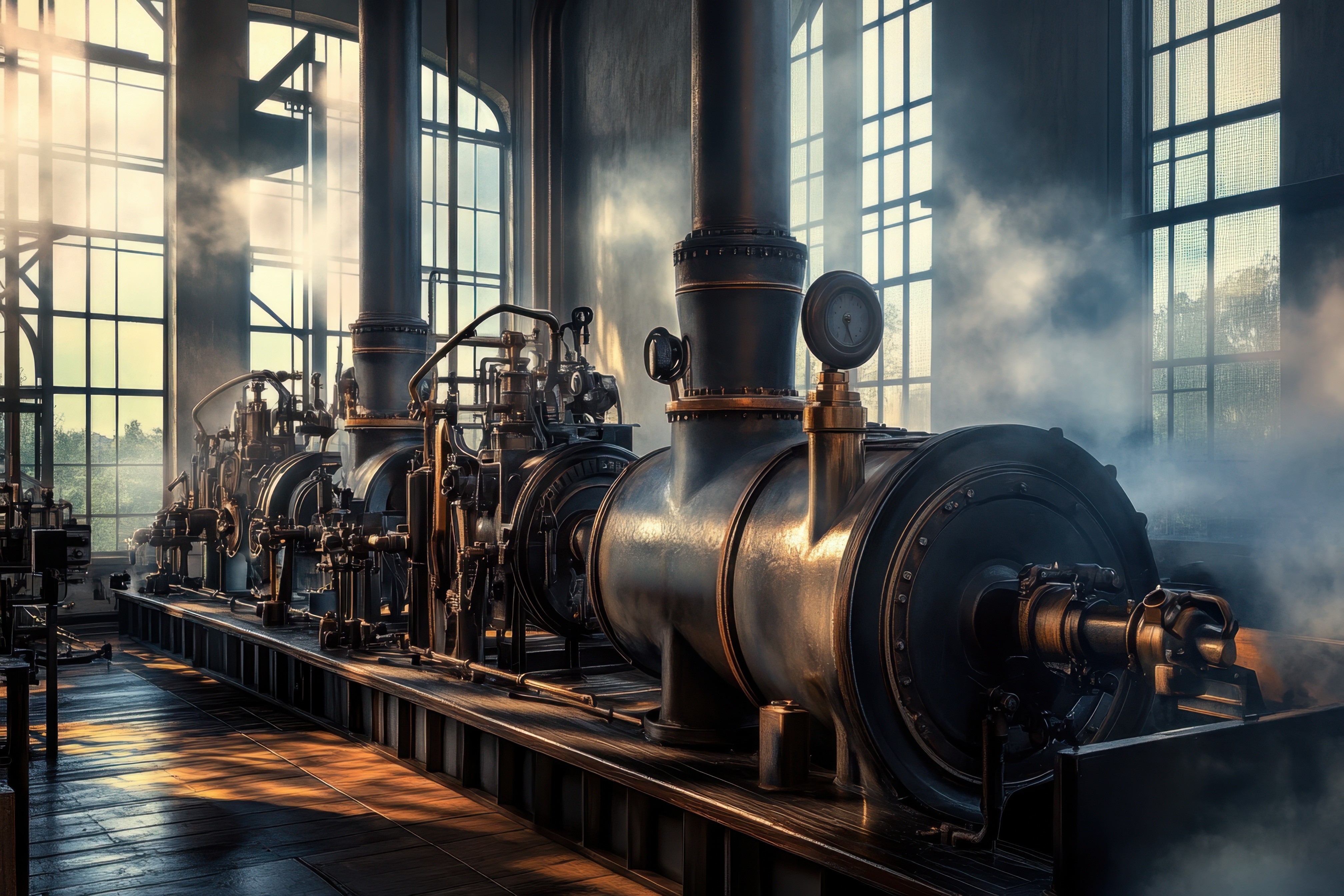


In the 1770s, a Swiss watchmaker named Pierre Jaquet-Droz stunned the courts of Europe with his incredible creations: clockwork "automata" in the form of a Writer, a Draughtsman, and a Musician. These were not simple toys. They were self-operating, programmable machines of breathtaking complexity. The Writer, for example, could be "programmed" to write any custom text, dipping its quill in ink and even shaking it to prevent blots. These 250-year-old marvels are a testament to the power of precision mechanics and provide a profound lesson for modern automation and control systems.
This article explores how the principles behind these 18th-century masterpieces are the same principles that drive high-reliability industrial automation today.

In modern industry, we rely on complex automated systems to perform critical tasks. Yet, we often tolerate systems that are unreliable, imprecise, or difficult to control. We accept a certain level of variance, downtime, and inefficiency as a "normal" part of operations. This creates a gap between what our machines could be doing and what they are doing, resulting in lost productivity and increased risk.
Pierre Jaquet-Droz was a master of precision mechanics, a craft he honed in the Swiss watchmaking tradition. His automata worked because every single component—every cam, gear, and lever—was designed and fabricated with meticulous, near-perfect accuracy. The "memory" of the Writer was a set of stacked cams, with its movements stored in their physical shapes. For the machine to work, this "physical programming" had to be flawless. His work was a demonstration of a core engineering principle: a complex automated system is only as reliable as its most basic components.

At MPX, our Engineering & Control Systems services are the modern embodiment of the Jaquet-Droz philosophy. We specialise in designing and implementing high-precision automated systems where reliability and accuracy are non-negotiable.
Like Jaquet-Droz, we understand that a robust system is built from the ground up:
Precision Engineering
We design systems based on a deep understanding of mechanical principles, ensuring that the hardware is perfectly suited to the task.
Intelligent Automation
We develop the "brain" of the machine, using modern PLCs and control logic that is as sophisticated and reliable as the cams and levers of the automata.
Functional Safety (SIL)
We apply the principles of functional safety to ensure that your most critical automated systems are not just precise, but verifiably safe, with built-in protections against failure.
From automating industrial machinery to designing the control systems for underground winders, our goal is to bring a 21st-century level of precision and reliability to your operations, creating systems that perform their tasks flawlessly, every single time.
When evaluating any automated system, look for these three hallmarks of quality:
Repeatability
Can the machine perform the exact same task, with the exact same parameters, thousands of times in a row without deviation?
Reliability
Is the system built with high-quality components and robust logic that minimises downtime? Is it designed to "fail-safe" if an error does occur?
Measurability
Does the system provide you with clear, accessible data on its own performance? A well-designed system reports on its own health and efficiency.
The Jaquet-Droz automata enchant us because they represent the pursuit of perfection—a flawless union of art and precision engineering. This same pursuit is the key to unlocking the full potential of modern industrial automation, creating systems that are not just functional, but truly remarkable.
Contact the MPX engineering team to discuss how we can bring a new level of precision and control to your operations.